
The double crochet stitch is one of the most useful and widely loved stitches in all of crochet — and learning it is a genuine turning point for any beginner. If you can already make a chain and a single crochet, the double crochet is your natural next step, and once it clicks, a huge world of patterns opens up: granny squares, blankets, sweaters, scarves, and textured stitch combinations that would otherwise be out of reach. In this complete step-by-step guide, you’ll learn exactly how to work a double crochet stitch, how the turning chain works, how to keep your edges straight, how to fix the most common beginner mistakes, and which easy projects to try first.
This tutorial uses US crochet terminology, where “double crochet” is abbreviated dc. (Heads-up if you browse UK patterns: a UK “treble crochet” is the same stitch, and a UK “double crochet” means our US single crochet — check out our complete crochet stitches guide for the full conversion chart.) By the end of this page, you’ll be able to crochet confident, even rows of double crochet from scratch.
What You’ll Need
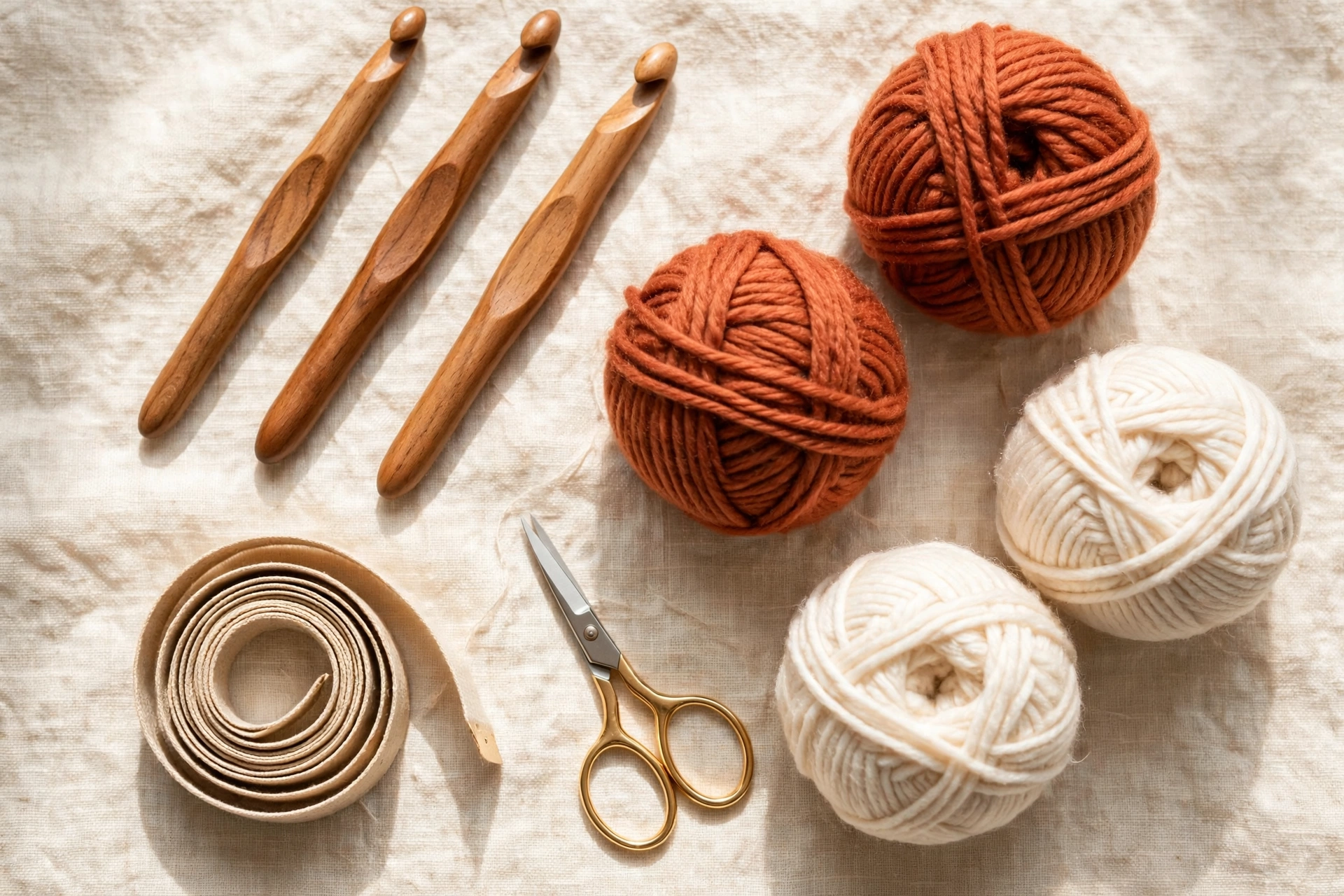
Double crochet is forgiving to learn, but the right supplies make it much easier to see your stitches and keep tension even. Here’s what to gather before you start:
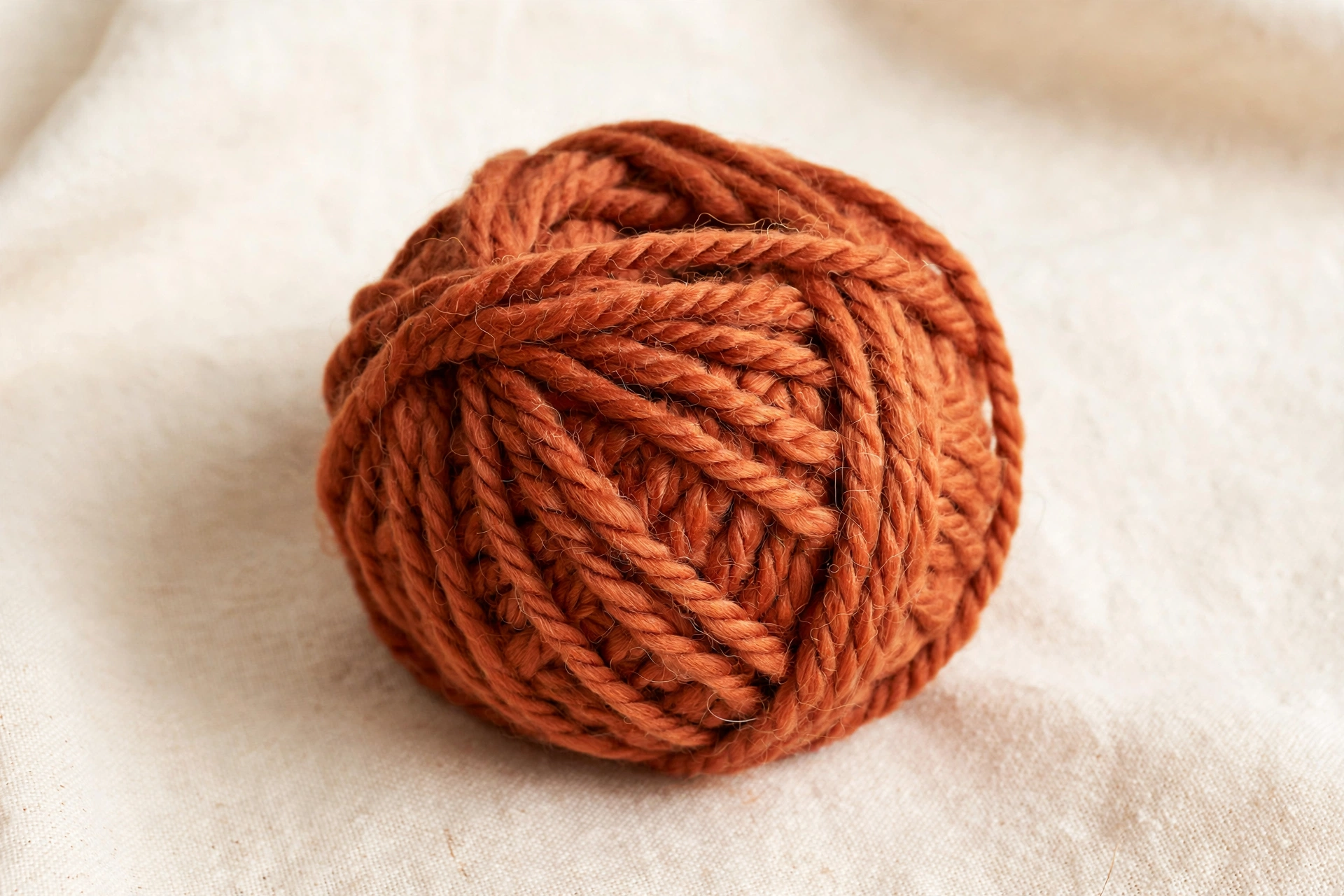
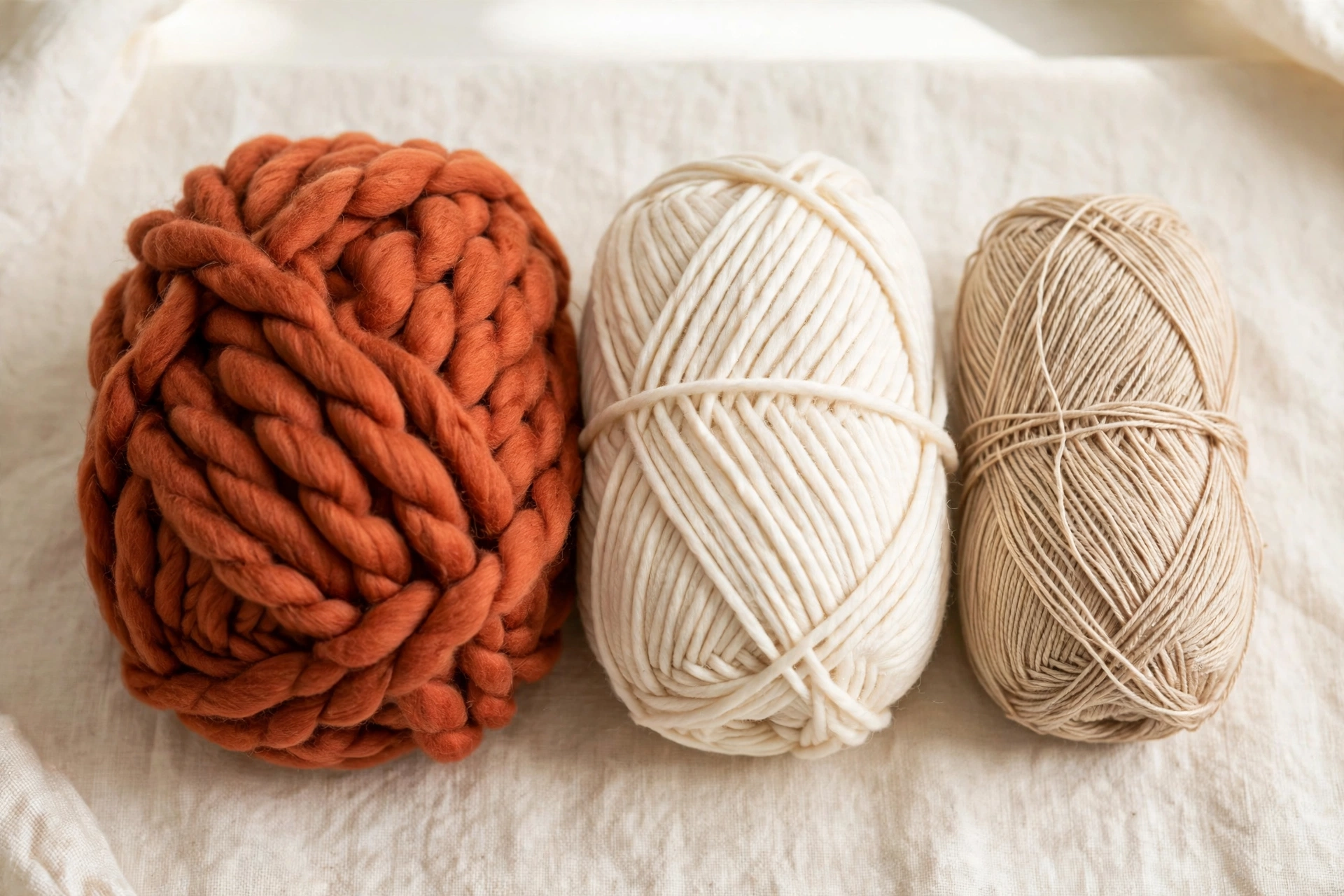
- Yarn — medium (worsted) weight, light or solid color: A smooth #4 worsted-weight acrylic or cotton yarn in a light, solid color (cream, light gray, or pastel) is ideal. Avoid dark, fuzzy, or variegated yarn while learning — you need to see each stitch clearly.
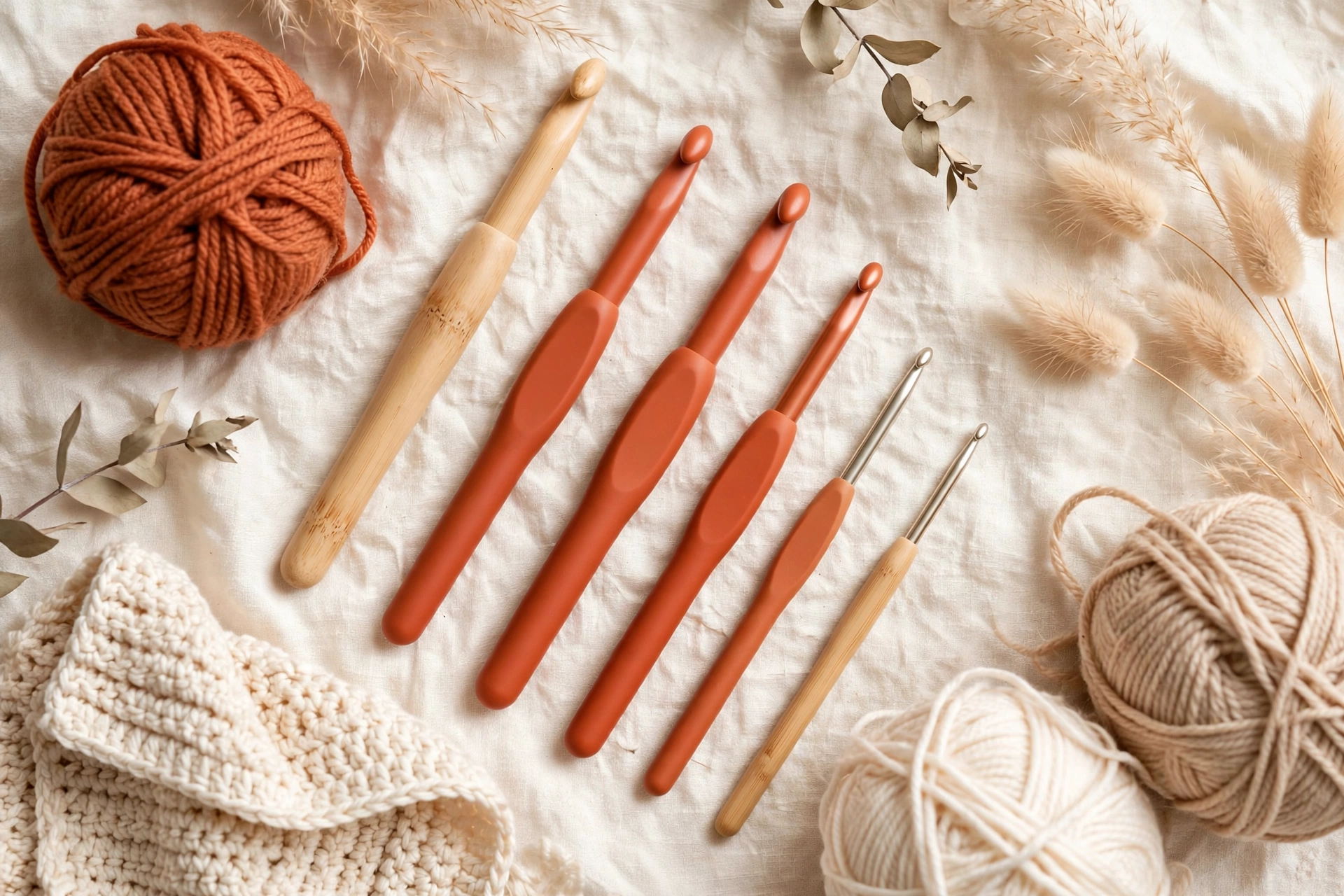
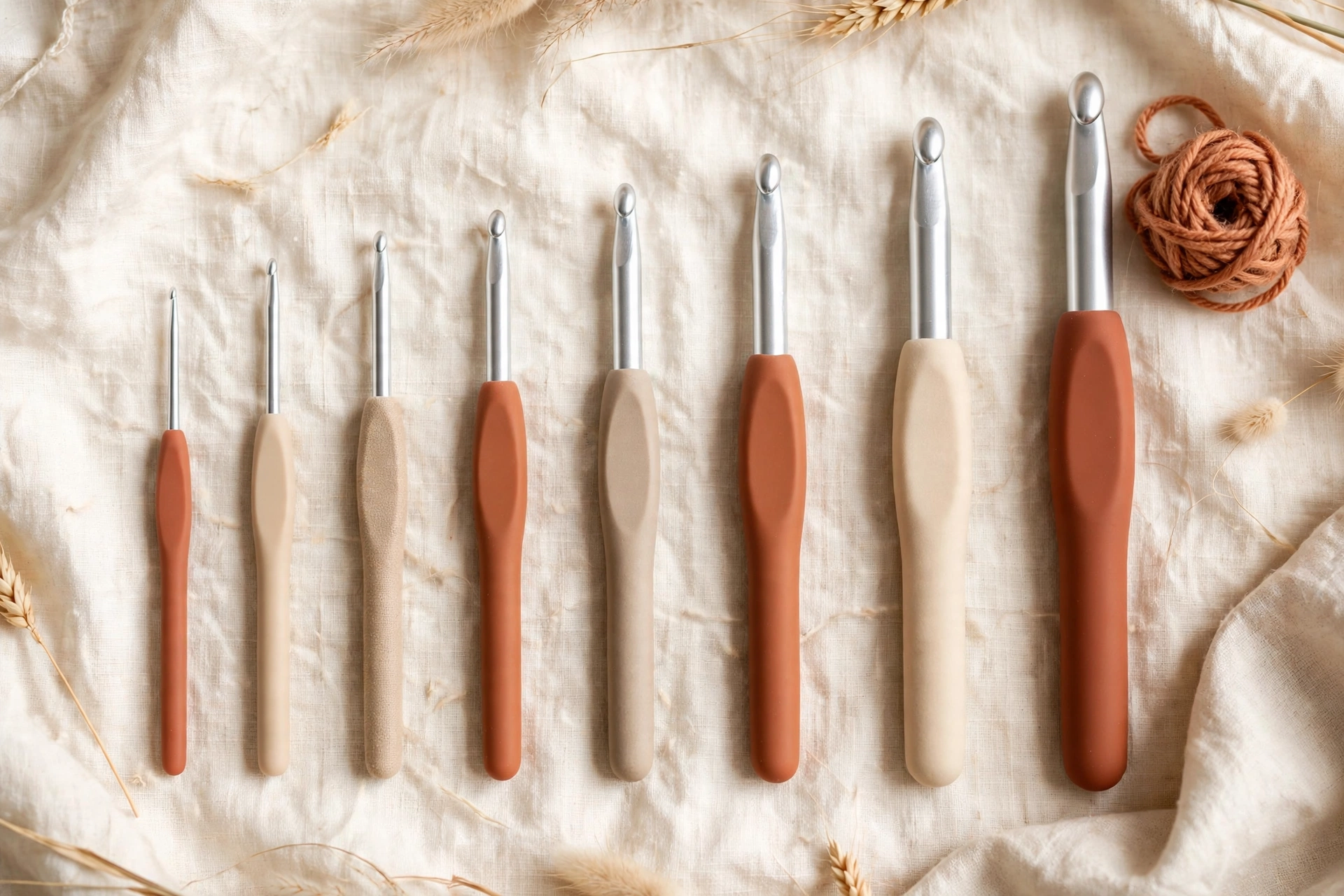
- Crochet hook — US H-8 (5.0 mm) or I-9 (5.5 mm): These sizes pair perfectly with worsted-weight yarn. An ergonomic handle helps if your hands tire. Check the yarn label for the recommended hook size.
- Scissors: A small, sharp pair for trimming yarn tails.
- Yarn (tapestry) needle: For weaving in ends when you finish your practice swatch.
- Stitch markers (optional but very helpful): Locking stitch markers make it easy to mark the first and last stitch of each row so your edges stay straight.
Double Crochet Stitch Anatomy: What You’re Actually Doing
Before you pick up the hook, it helps to understand the logic of the stitch. Every basic crochet stitch is built from two moves: inserting your hook and pulling yarn through loops. The taller the stitch, the more yarn-overs and pull-throughs it needs.
A double crochet is made with one yarn-over at the start, then three pull-through stages: pull up a loop (3 loops on hook), yarn over and pull through 2 (2 loops remain), yarn over and pull through the last 2. That’s it — the “double” in the name comes from the two pull-through-two stages at the end. Compared to a single crochet (short, dense) and a half double crochet (medium height), double crochet is tall and open, which is why it works up fast and drapes beautifully.
Key Abbreviations You’ll See in Patterns
- ch — chain
- dc — double crochet
- st(s) — stitch(es)
- sk — skip
- yo — yarn over
- sl st — slip stitch
- turning ch / tch — the chain(s) at the start of a row that bring your work up to the new row’s height
How to Double Crochet: Step-by-Step Tutorial
Work through these steps slowly with your practice yarn. Make a small swatch rather than a project — about 20 chains wide is perfect for learning.
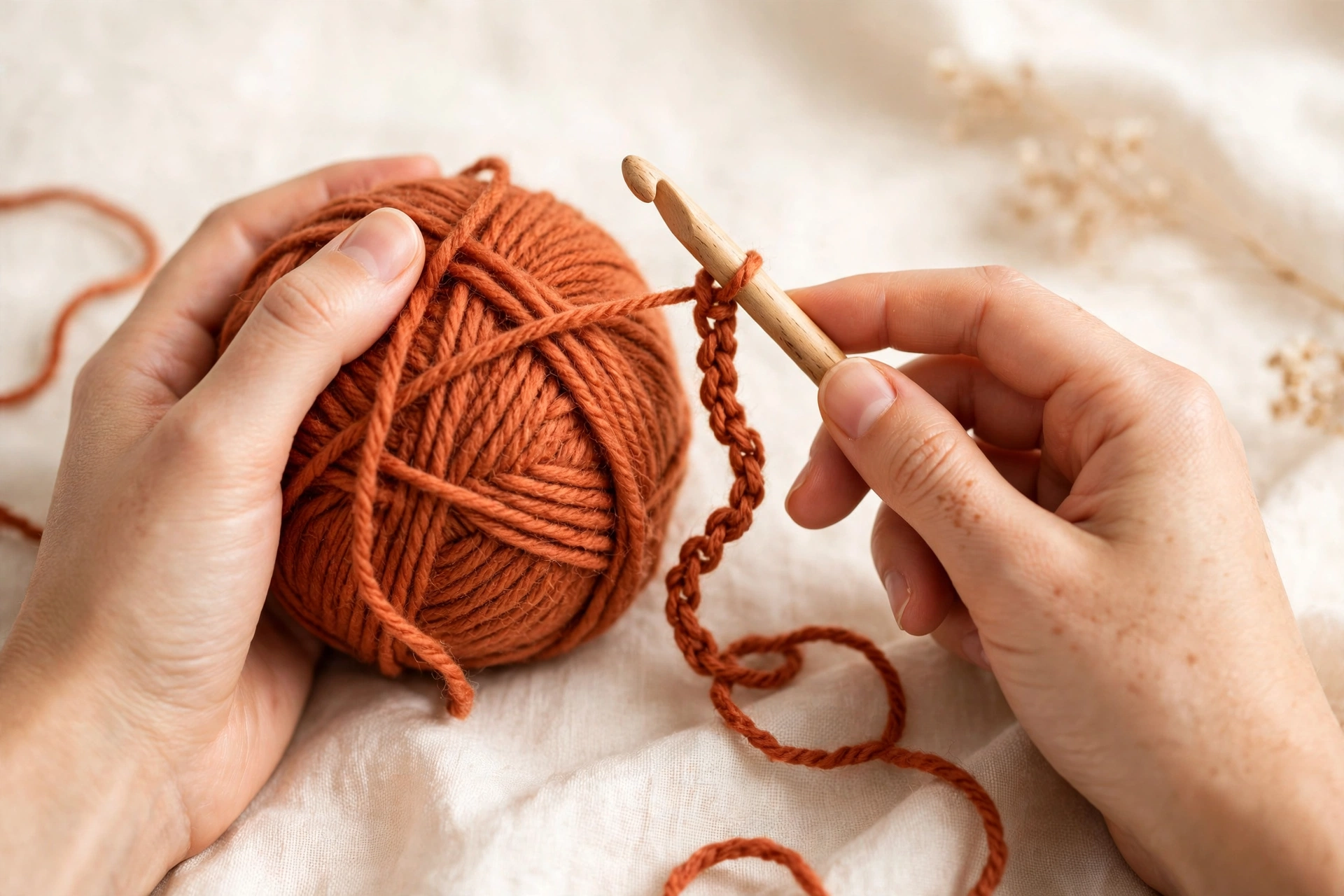
Step 1 — Make a slip knot and foundation chain
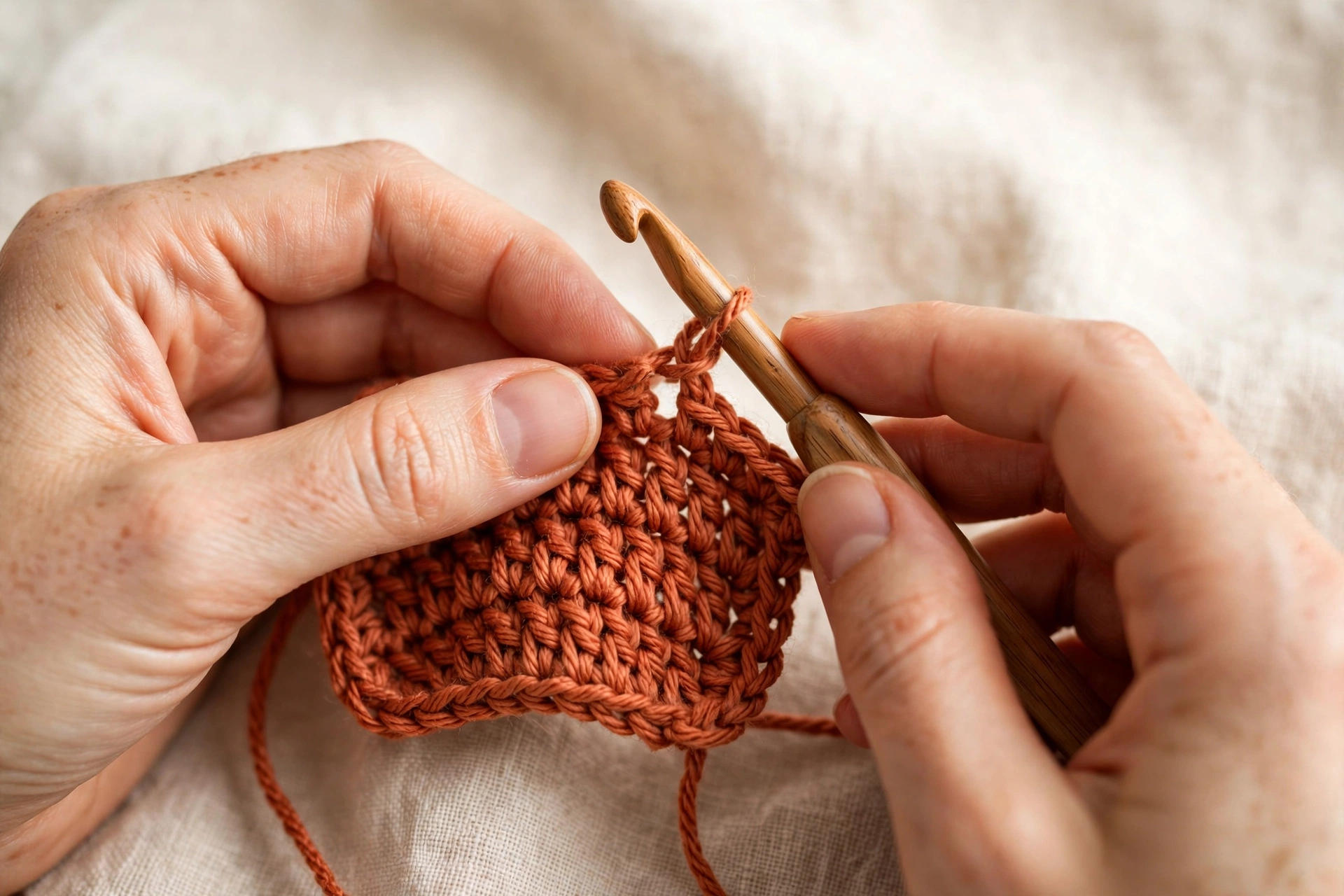
Place a slip knot on your hook and chain 23. (Why 23? You’ll work your first row of dc into the chain, and the first 3 chains count as your first double crochet, leaving 20 stitches — a nice, countable practice width.) Keep your chains relaxed and even; tight chains are the #1 reason beginners struggle with row 1. If your chain curls, that’s normal — it will flatten once you add stitches.
Step 2 — Yarn over first (this is the signature move)
Before inserting your hook anywhere, wrap the yarn over your hook from back to front. This initial yarn-over is what gives the double crochet its height. Every dc starts this way — no yarn-over, no double crochet. If you’re coming from single crochet, this is the new habit to build.
Step 3 — Insert the hook into the 4th chain from the hook
Count back from your hook: skip the 3 chains closest to the hook (these become your turning chain and count as your first dc), and insert the hook into the 4th chain. Slide the hook under the top loop of the chain — and for a sturdier edge, try catching the back bump of the chain too.
Step 4 — Yarn over and pull up a loop
Yarn over again and draw the yarn through the chain. You now have 3 loops on your hook. Take a breath — the stitch is halfway done, and this loop count (3) is your checkpoint. If you have 2 or 4, something slipped; just pull it out and redo the step.
Step 5 — Yarn over, pull through 2 loops
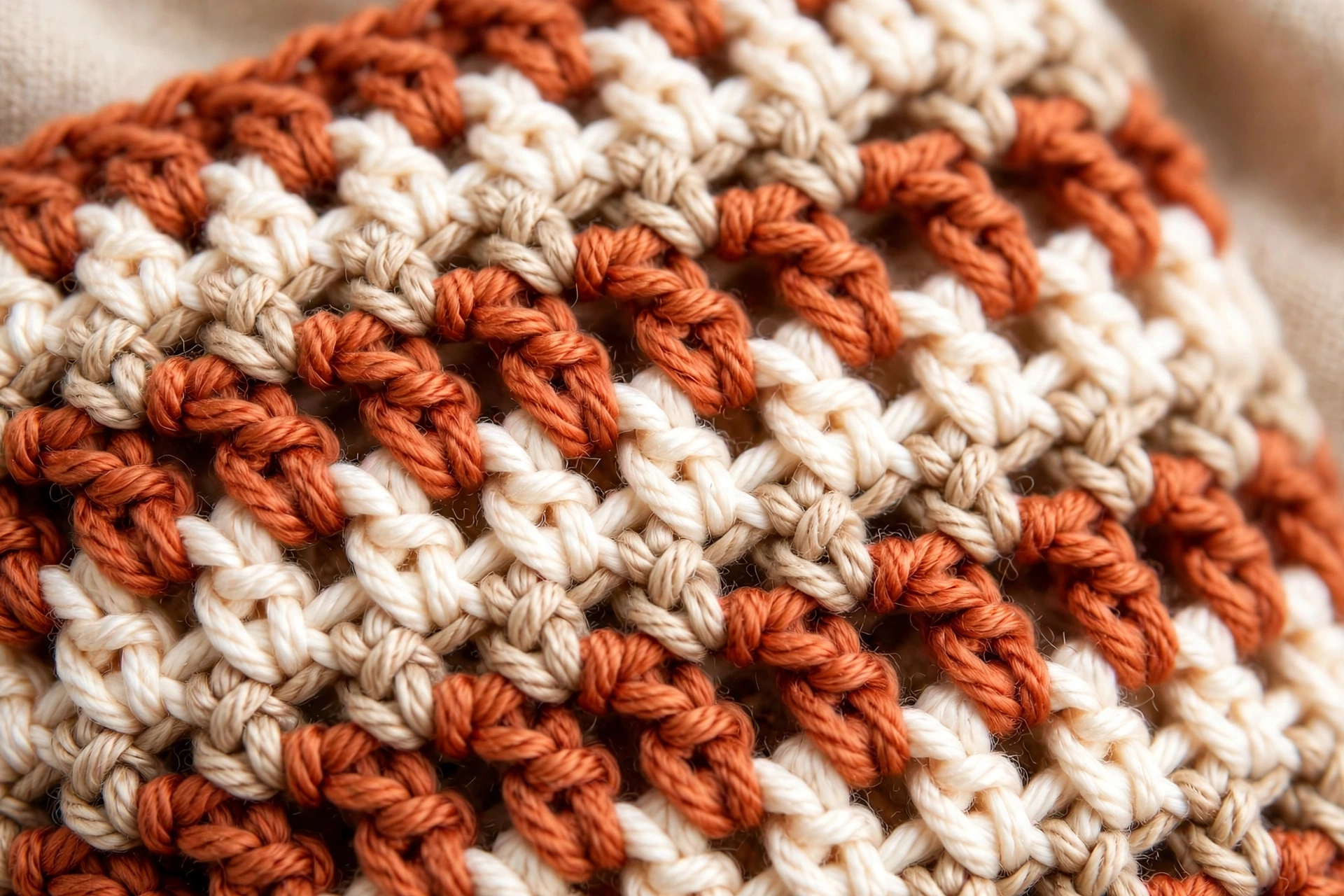
Yarn over once more and pull through only the first 2 loops on your hook. You now have 2 loops remaining. Notice the little “V” forming at the top of the stitch — those are the two loops you’ll work into on the next row.
Step 6 — Yarn over, pull through the final 2 loops
Yarn over one last time and pull through the remaining 2 loops. One double crochet complete! Repeat steps 2–6 in each chain across the row. Count as you go — you should finish with 20 double crochet stitches (the turning chain counts as #1).
Step 7 — Turn your work and chain 3
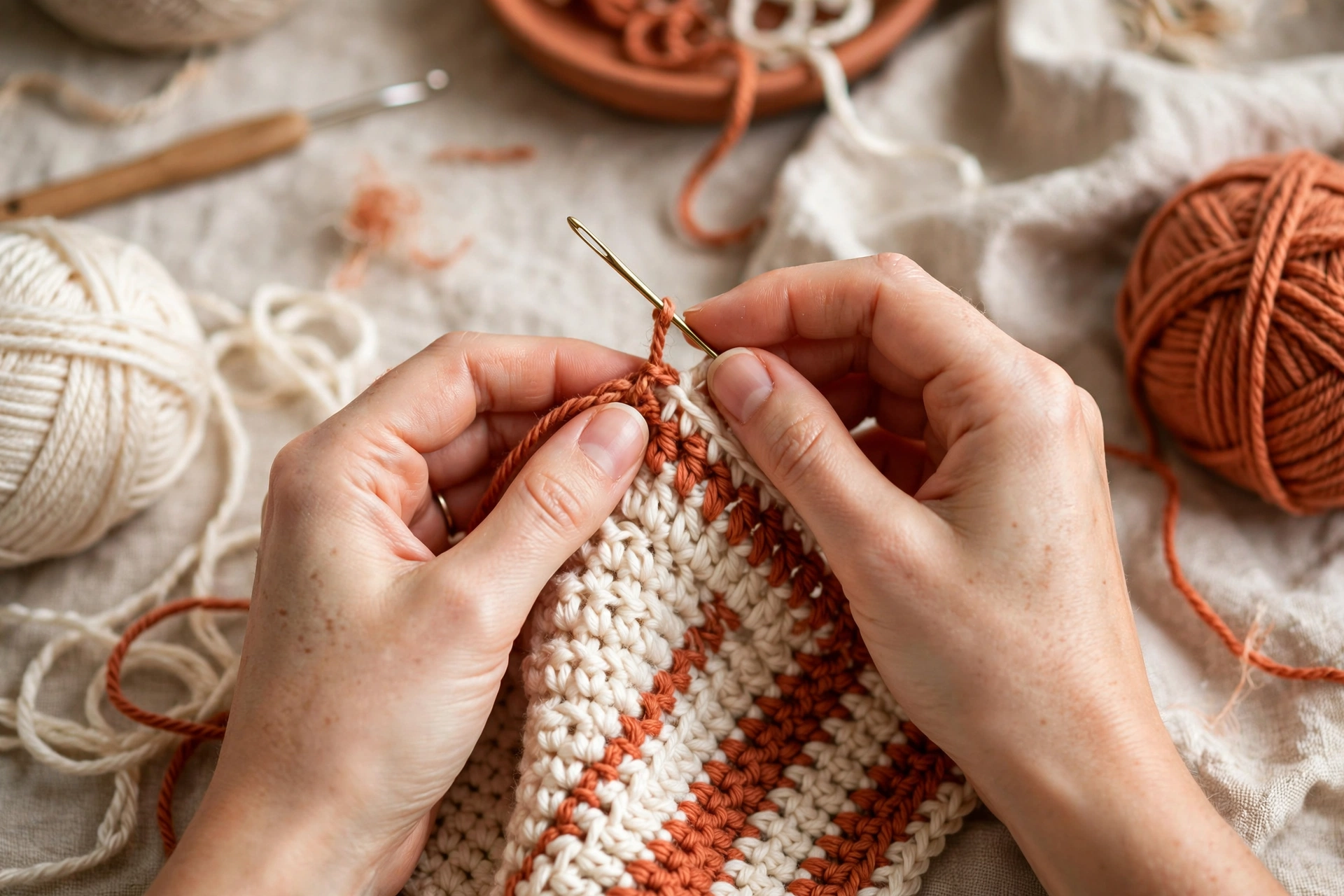
At the end of the row, chain 3 and turn your work. This turning chain brings your yarn up to the height of the next row and counts as the first double crochet of the new row. This is the single most misunderstood part of double crochet — treat the ch-3 as a real stitch.
Step 8 — Work row 2 (and beyond)
Yarn over and work your first real dc into the second stitch of the row (skip the stitch directly below the turning chain, since the ch-3 already stands in its place). Work one dc into the top two loops of each stitch across. When you reach the end, work your last dc into the top of the turning chain from the previous row — this keeps your stitch count at 20 and your edge straight. Chain 3, turn, and repeat.
Step 9 — Fasten off and weave in ends
When your swatch is the size you want, cut the yarn leaving a 6-inch tail, yarn over, and pull the tail all the way through the last loop. Tug gently to close the knot. Thread the tail onto your yarn needle and weave it through the backs of several stitches in a zigzag to hide it, then trim.
Choosing the Right Hook Size for Double Crochet
Hook size changes how your double crochet fabric behaves. The same stitch can be dense or lacy depending on the hook:
- Go down a hook size (e.g., G-6/4.0 mm with worsted yarn) for tighter fabric — great for bags, baskets, and amigurumi-adjacent pieces where you want structure.
- Use the label-recommended size (usually H-8/5.0 mm) for balanced, everyday fabric — the safe default for scarves, blankets, and garments.
- Go up one or two sizes (I-9/5.5 mm or J-10/6.0 mm) for drapey, open fabric — perfect for shawls, summer tops, and anything that should flow.
When in doubt, crochet a 4×4-inch test swatch, measure your gauge, and compare it to your pattern’s requirements. Ten minutes of swatching saves hours of rework.
Double Crochet Variations to Try Next
Once the basic dc feels automatic, these variations use the same muscle memory with small twists — they’re the gateway to textured crochet:
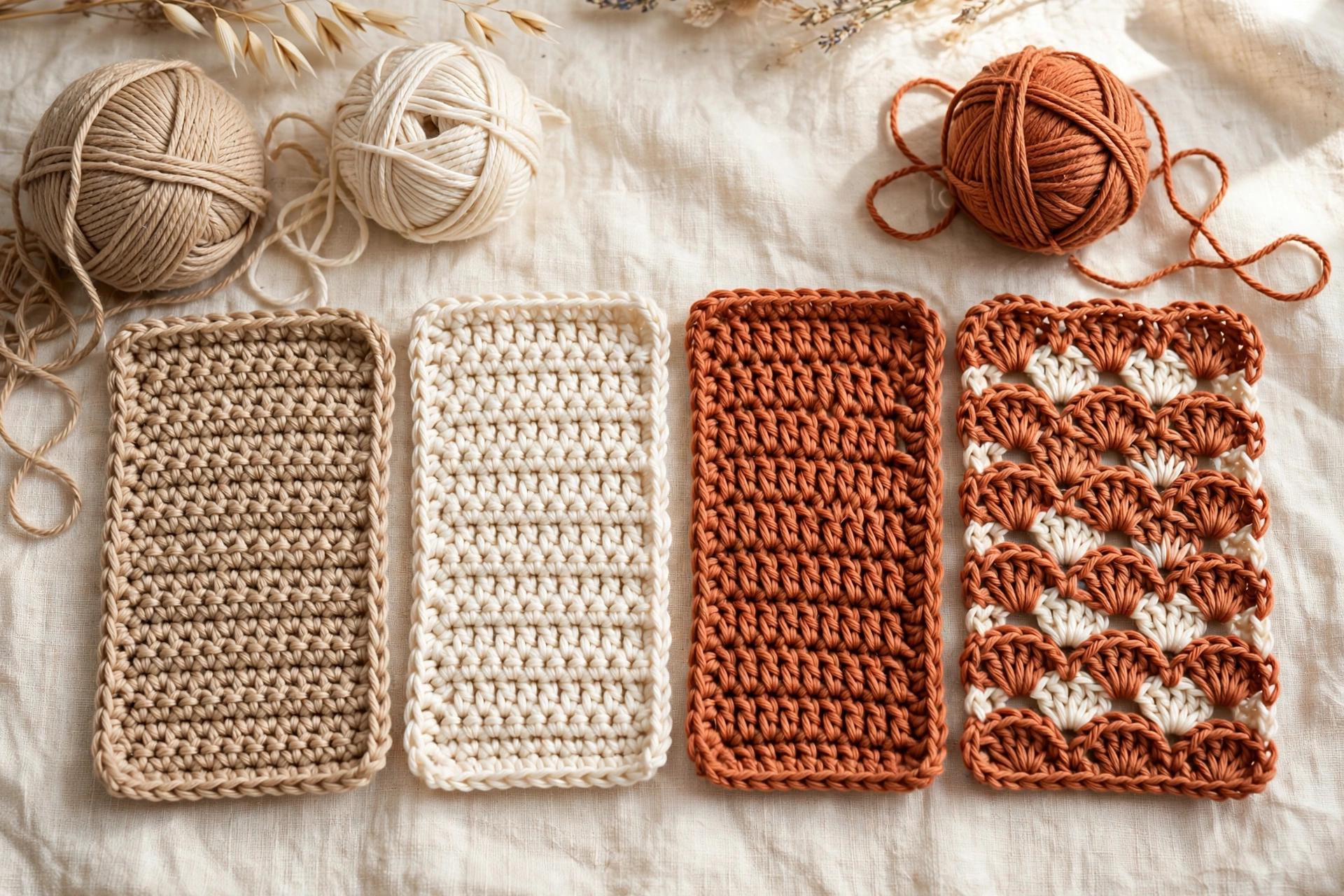
- Double crochet 2 together (dc2tog) — a decrease: work two dc but stop each before the final pull-through, then finish them together. Essential for shaping hats and garments.
- Front post double crochet (fpdc) — instead of inserting into the top loops, you work around the post (the vertical body) of the stitch below from the front. Creates raised ribs and cables.
- Back post double crochet (bpdc) — the same idea worked from the back; fpdc and bpdc together make classic ribbing.
- Linked double crochet — connects each dc to the previous stitch’s horizontal bar, eliminating the gaps between tall stitches for a solid, warm fabric.
- Foundation double crochet (fdc) — builds the foundation chain and first row of dc simultaneously, so you never fight a tight starting chain again.
Every one of these will get its own full tutorial on this site — the basic dc you’re learning today is the foundation for all of them.
Common Double Crochet Mistakes (and Easy Fixes)
1. Forgetting the initial yarn-over
If your “double crochet” looks short and dense, you’re probably skipping the yarn-over before inserting the hook — which actually makes a half double crochet. Fix: Say “yarn over” out loud before every stitch until it becomes automatic.
2. Losing or gaining stitches at the edges
Wavy, trapezoidal edges almost always come from miscounting the turning chain — either working into the stitch below it (too many stitches) or skipping the top of it at the row’s end (too few). Fix: Place a stitch marker in the top chain of your turning chain, and count your stitches every few rows until your eye learns the rhythm.
3. Pulling the turning chain too tight or too loose
A tight ch-3 puckers the edge; a loose one leaves a gaping hole. Fix: Chain with the same relaxed tension as your stitches. Some crocheters prefer a ch-2 turning chain for dc (it doesn’t count as a stitch) for a neater edge — try both and see which looks better in your hands.
4. Splitting the yarn
Working with the hook tip instead of the shaft, or stabbing at stitches, splits plies and makes a mess. Fix: Insert the hook decisively with the head pointing slightly down, and let the shaft — not the tip — form each loop.
5. Inconsistent tension between the two pull-throughs
If some stitches lean or look uneven, you’re probably pulling tighter on one pull-through than the other. Fix: Slow down and make each “yarn over, pull through 2” the same size. Speed comes later; evenness comes first.
6. Working into the wrong part of the stitch
Beginners often work into only the front loop, or into the space between stitches, which twists the fabric. Fix: Look for the little “V” at the top of each stitch from the previous row and slide your hook under both loops of the V (unless a pattern says otherwise).
What to Make With Double Crochet: Beginner Project Ideas
Double crochet works up roughly twice as fast as single crochet, so it’s the perfect stitch for satisfying first projects:
- A simple scarf: Chain 25–30, dc every row until it’s as long as you like. One skein of worsted yarn is plenty.
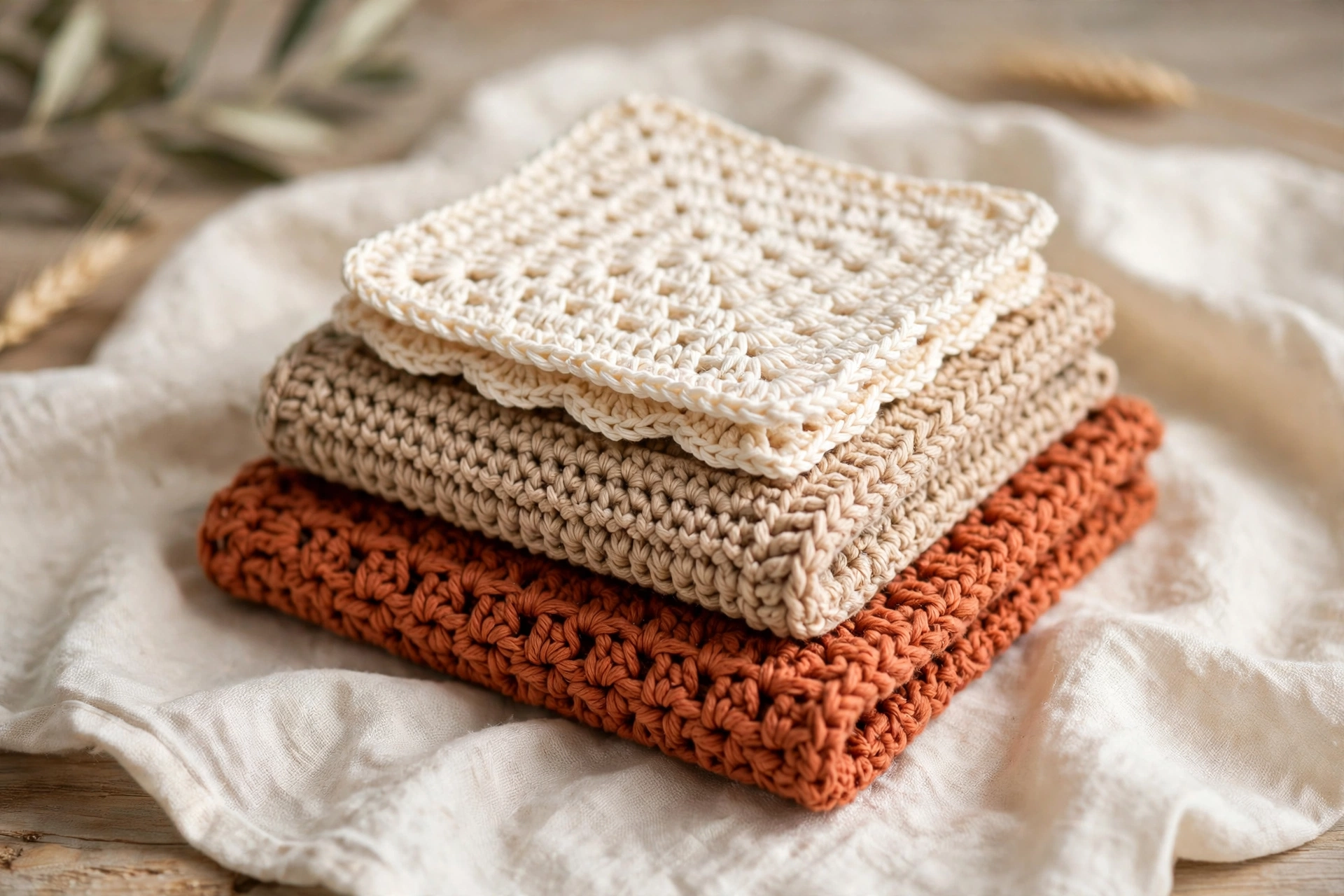
- A dishcloth or washcloth: A small square of dc (about 8×8 inches) in cotton yarn — quick, useful, and great tension practice.
- A classic granny square: The most famous dc project of all — clusters of 3 dc worked in the round. See our granny square pattern tutorial next.
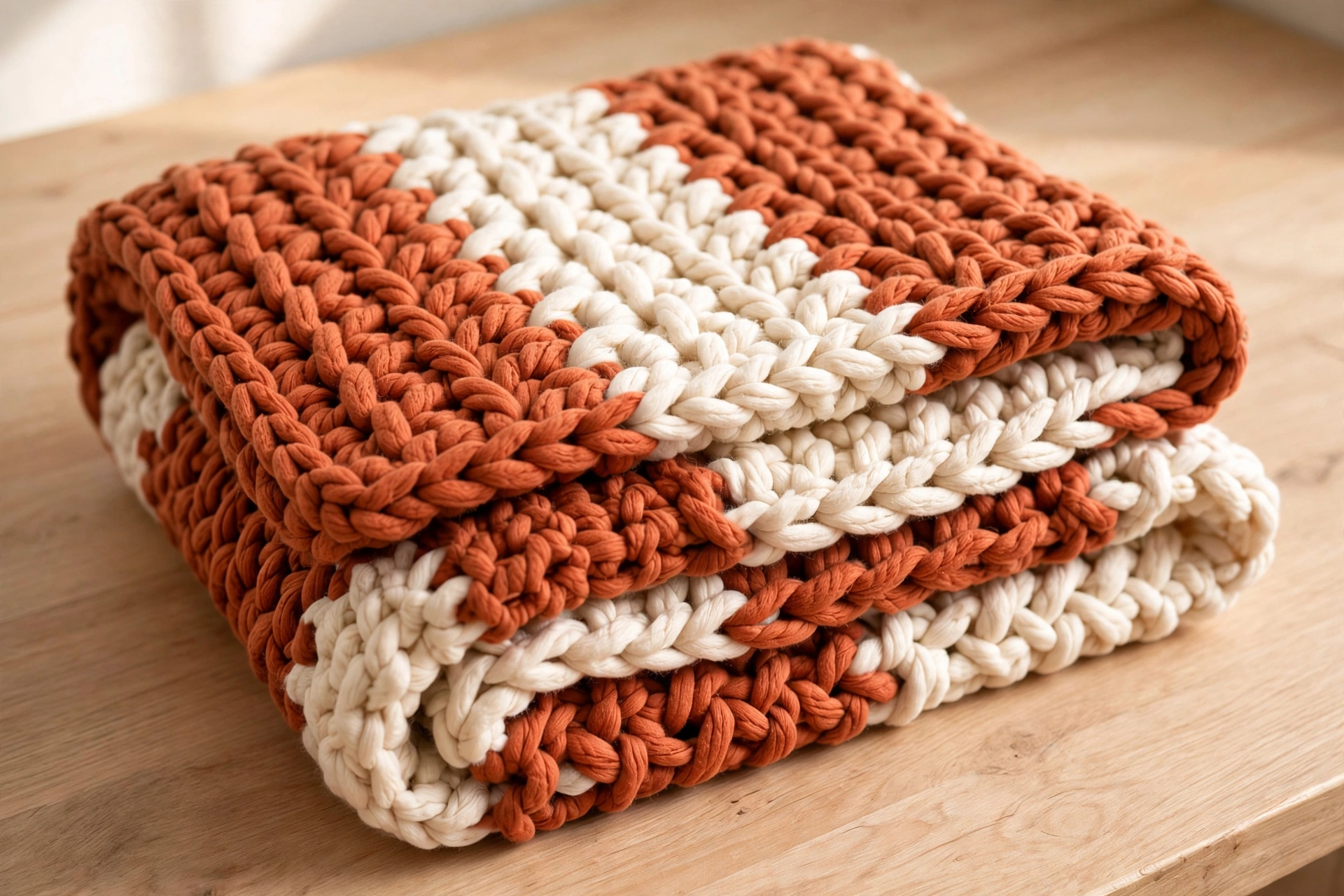
- A baby blanket: Dc rows in stripes of color; a 30×36-inch blanket works up surprisingly fast.
- A market tote: Dc fabric with a larger hook makes a sturdy, stretchy bag.
Watch: Double Crochet Video Tutorial
Some steps are easier to grasp in motion. This right-handed video tutorial walks through the double crochet stitch slowly, alongside the written steps above:
Pause and replay any step as often as you need — there’s no prize for getting it on the first try.
Double Crochet FAQs
Does the turning chain count as a stitch in double crochet?
Usually, yes. In most patterns, the ch-3 at the start of a dc row counts as the first double crochet, so you skip the first stitch of the row and work your last dc into the top of the previous row’s turning chain. However, some designers use a ch-2 that does not count — always follow your specific pattern, and when writing your own projects, pick one convention and stick with it.
Why are my double crochet edges wavy or uneven?
Uneven edges are almost always a stitch-count problem, not a tension problem. You’re likely adding a stitch by working into the base of the turning chain, or dropping one by skipping the top of the previous turning chain. Count your stitches every row for a while and mark the turning chain with a stitch marker.
What’s the difference between double crochet and treble crochet?
Double crochet starts with one yarn-over and has two “pull through 2” stages. Treble (triple) crochet starts with two yarn-overs and has three pull-through stages, making it roughly one-and-a-half times taller. Treble creates lacier, drapier fabric; double crochet is the everyday workhorse.
Can I use double crochet for a blanket?
Absolutely — it’s one of the most popular blanket stitches because it works up fast and has a soft, flexible drape. For a warmer blanket, use the yarn label’s recommended hook size; for a lacier throw, go up a hook size or two. Striped dc blankets are a classic beginner project.
Is double crochet the same in UK and US patterns?
No — and this trips up nearly every beginner at least once. US double crochet = UK treble crochet. The UK “double crochet” is our US single crochet. Always check which terminology a pattern uses before you start; most modern patterns state it near the top.
Related Articles
- Crochet Stitches Explained: The Only Guide You’ll Ever Need — the full stitch ladder from chain to treble, with the US/UK conversion chart.
- Half Double Crochet (HDC): Easy Step-by-Step Tutorial — the stitch right below dc in height; great for denser fabric.
- Granny Square Pattern: Classic Crochet Square for Beginners — put your new dc skills to work in the most iconic crochet motif ever.
Keep Learning
- Lion Brand Video Library — free stitch videos including double crochet from a major yarn company.
- Yarnspirations: How to Crochet the Classic DC V-Stitch — a beautiful next step once your basic double crochet is solid.